
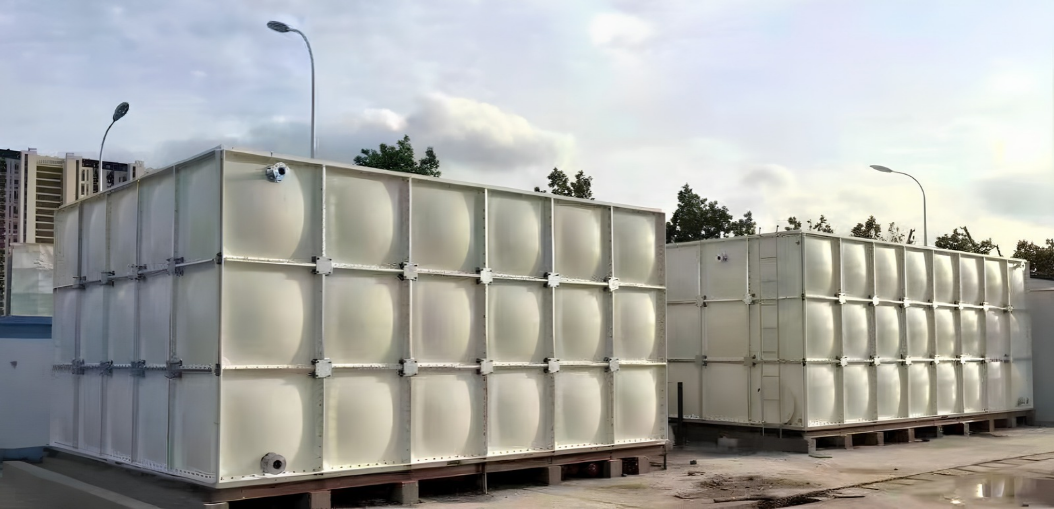
Why estate water runs short
Three causes come up on estate sites, and the first is the most common:
- Storage sized for fewer residents than now live there. The estate has grown, and the tank has not. Adding or extending a tank is the fix.
- Leaking tanks. Water is lost at panel joints, bolts and fittings. Servicing the tank is the fix.
- Borehole pump and power failures. When the pump or the generator stops, the tank is not refilled. Get the pump or generator serviced; enough days of storage, set at our inspection, carries the estate through an outage.
How to check your estate’s supply
Four checks an estate or facility manager can make before calling anyone:
- Count the people the supply now serves, and multiply by 120 litres. That is one day’s need, the floor your tanks must clear; the full need multiplies it by the days of storage, set at our inspection.
- Check tank levels morning and evening, when demand peaks, to see whether storage runs dry.
- Walk the tank for leaks: drips or damp at panel joints, bolts and fittings, and wet ground under the base.
- Log borehole pump and generator hours, to see whether refilling stops when the power fails.
Sizing storage for an estate
Storage needed = people served × litres per person per day × days of storage the site needs.
- People served: everyone the shared supply feeds.
- Litres per person per day: 120 litres for urban supply, the planning value in the Nigerian Water Supply and Sanitation Policy.
- Days of storage: set at the free site inspection, from how reliable the borehole, mains and power supply are.
The days of storage change from one estate to the next, so this guide gives the method, not a total. Our water storage systems page gives the footprint and height of each common tank size, so you can check the space on your site.
Fixes, from the least disruptive
1. Service and clean the tank you have (for leaks)
A service drains the tank, cleans and disinfects the inside, and checks the bolts, joints and fittings for leaks. We service any FRP/GRP sectional tank, whoever installed it. The estate keeps its water where a second tank can carry it; otherwise, plan for the supply to be off while the tank is drained. After the free servicing period, a tank should be cleaned once a year.
2. Add a tank (for undersized storage)
A second FRP/GRP tank adds storage without opening the one you have, so residents keep their water while it goes in. This is also the route for an estate whose tank is concrete, steel or plastic. Our tanks start at 5,000 litres with no fixed maximum, and stand on a cement base, a metal stanchion, or a rooftop once a structural engineer has signed it off, which FortevaWorks arranges. On estates in Lekki, Victoria Island and Ikoyi we join the panels with grade 316 stainless steel bolts and flanges, the grade made for salt air. Panel sizes, resin and fittings are on our FRP/GRP water tanks page.
3. Extend the existing tank (for undersized storage)
An FRP/GRP sectional tank can be extended: it is opened up, panels are added and it is resealed. The estate keeps its water where a second tank can carry it while the work is done. The additional cost is set after the free site inspection.
Replacing a tank
Replace a tank when it is damaged or leaking beyond repair. The old tank keeps supplying the estate until the new one passes its 24-hour fill test: the new tank is filled to full capacity and left standing for 24 hours, then every panel joint and bolt is checked for leaks. The estate supplies the water for the test.
When to call a contractor
Call us when leaks at joints or bolts come back after tightening, or when check 1 shows your tanks below even one day’s need. FortevaWorks has worked on more than 20 FRP/GRP tank installations for residential estates.