
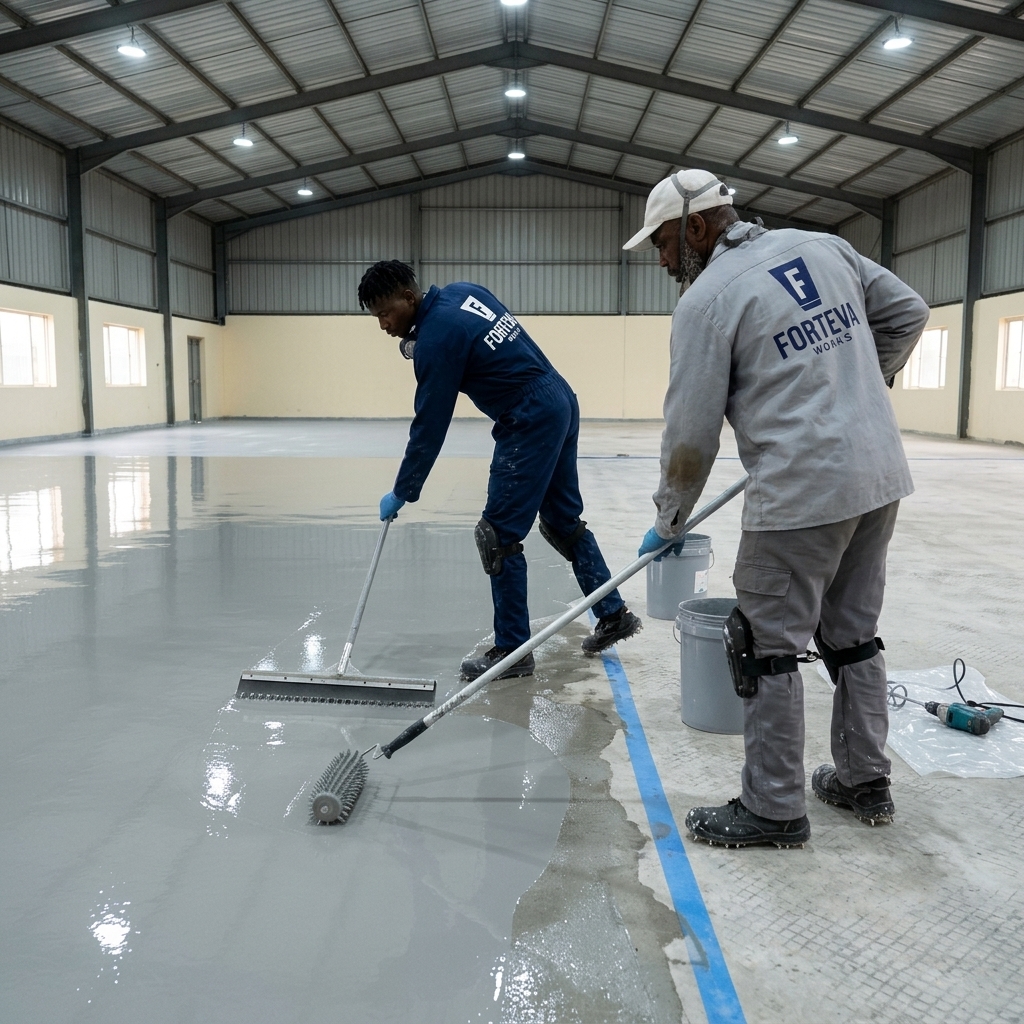
FortevaWorks lays epoxy floors, not tiles. We have worked on more than 50 epoxy floors for factories in Ogun State, and this guide answers from what those slabs need.
Choosing the epoxy for the working floor
The thickness follows what runs on the floor:
- 2mm: hand trolleys and light jacks.
- 3mm: daily electric forklifts.
- 5mm: heavy machinery and steel-wheeled equipment.
- 10mm: maximum loads and heavy traffic.
Fully cured epoxy resists oils and alkaline cleaners (the strong soaps used to wash factory floors) well, and diluted acids moderately. It does not stand up to strong solvents or concentrated acids, so tell us at the site inspection what is spilled or washed on your floor. Wash-down areas, ramps, loading bays and receiving docks get an anti-slip finish, with the texture set by how wet the area gets.
Before any epoxy goes down, cracks are filled, oil-soaked concrete is cleaned or ground back, old coatings are removed, damp slabs are tested and dealt with, and the slab is primed so the resin bonds to it. Repair work found at the site inspection is listed in the quotation. During application the coating thickness is checked, and after full cure the floor is inspected for bubbles, pinholes and soft spots and given a pull-off test with you, which confirms the coating is bonded to the concrete.
What to ask at the site inspection
- Thickness. Which thickness does the traffic on each part of the floor call for?
- Slab repairs. Which repairs does the slab need, and where are they listed in the quotation?
- Sections. In what order can the floor be laid, so the warehouse keeps working?
- Finish. Which areas get anti-slip, and which glossy or matte?
- Foot traffic. The floor is ready for foot traffic 3 days after the final coat. Where does that day fall in your stock and dispatch schedule?